
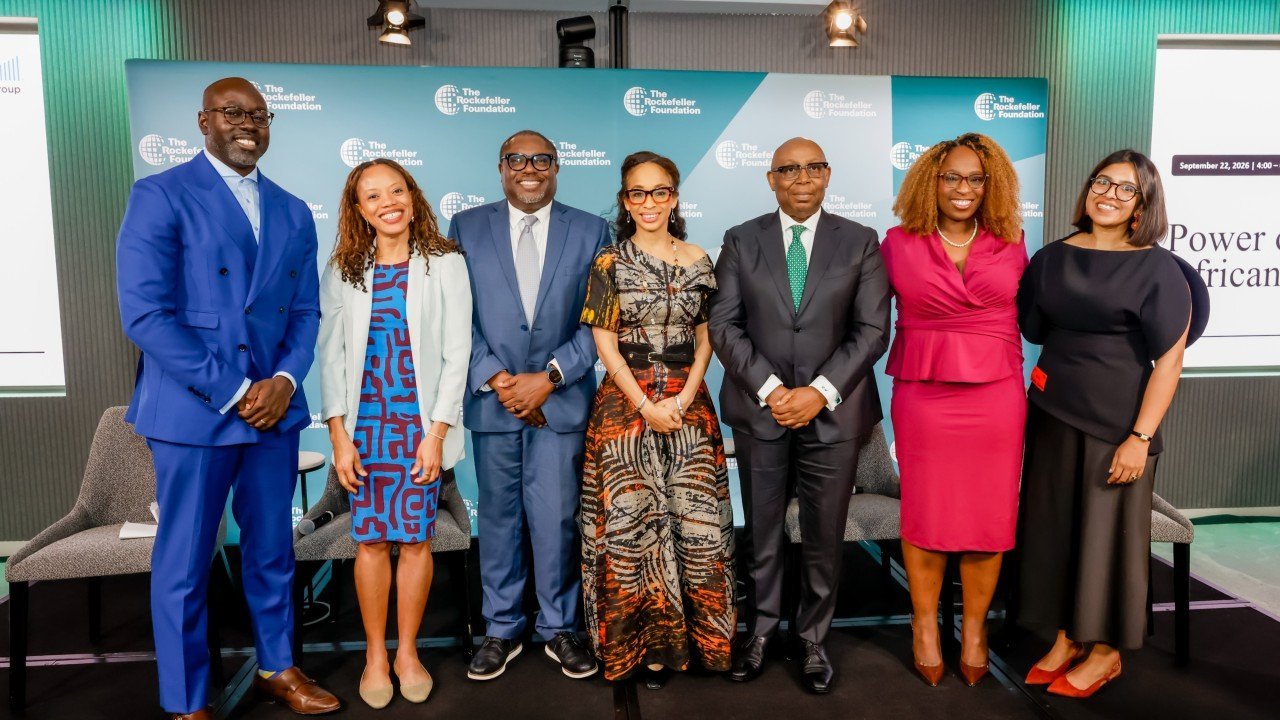
Cover photo credit: Rockefeller Foundation
At this year’s United Nations General Assembly, I attended a side event on African diaspora philanthropy at the The Rockefeller Foundation in New York. Funders, investors, philanthropic advisors, and diaspora leaders filled the program with examples of how African diasporas are mobilizing philanthropy across the continent.
Dr. Ndidi Okonkwo Nwuneli , co-founder of Wealth for Impact, framed the urgency well when she called on everyone present “to galvanize African wealth for African development.” Nigeria surfaced again and again as the prime example, and it’s worth taking a deeper dive into how Nigerians at home and abroad are unlocking diaspora philanthropy today.
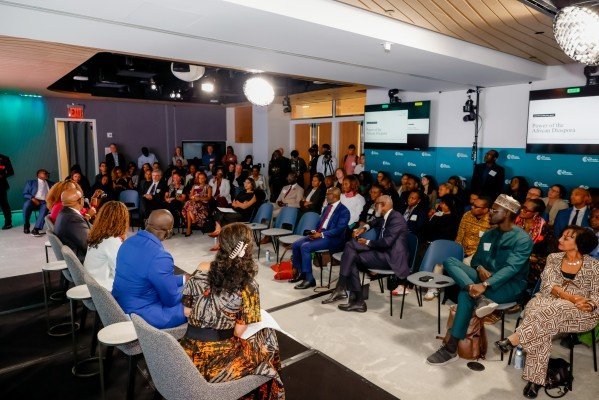
Diaspora Capital Surpasses Africa’s Largest Revenue Sources
The conversation opened with scale. William Asiko , who leads the Rockefeller Foundation’s Africa Regional Office, reminded us that “the diaspora today in Africa is one of the biggest providers of foreign exchange for our countries,” and he posed the question that shaped the rest of the afternoon: “How do we channel this money towards development?” For Nigeria, the numbers make that question especially compelling. Gbenga Oyebode of the African Philanthropy Forum pointed out that “diaspora remittances are bigger than crude oil earnings,” a striking shift for an economy long defined by oil.
This details is supported by a recent study, Driving Sustainable Development in Nigeria Through Diaspora Philanthropy, a Foreign Policy Analytics report with the Ford Foundation ., authored by Vivian Agbegha, Isabel Schmidt, Dr. Emily Myers and Dr. Mayesha A..The report stated at least 17 million Nigerians live in the diaspora, and they sent home USD 23 billion in 2023, making the diaspora the country’s second-largest source of foreign currency after crude oil.
With Nigeria needing an estimated USD 31.5 billion a year to reach its Sustainable Development Goals, diaspora capital stands out as one of the country’s most natural development partners.
Structure and Trust Turn Generosity Into Lasting Impact
African diasporas already give generously, and much of the discussion centered on the vehicles that help that giving grow. Myriad USA works on exactly this challenge, as Kady Sylla, its Director for Africa and the Middle East, explained. Tools like fiscal sponsorship and tax-deductible donor-advised funds already exist for diaspora donors, and there is greater opportunity in exploring how to pool diaspora philanthropic funds.
Pooling depends on trust, and Kwame Owusu-Kesse, CEO of the Harlem Children’s Zone, offered one of the most useful frameworks of the day by breaking trust into four elements, “sincerity, reliability, competence, and care.”
The FP Analytics research shows Nigerian philanthropists building trust through that same discipline. Ofovwe Aig-Imoukhuede of the Aig-Imoukhuede Foundation told the researchers that “we had to have proof of concept,” and the results across the diaspora speak for themselves.
The Nigerian Nurses Association of USA grew its network of adopted primary health centers from four in 2019 to 30 by 2025, diaspora efforts helped reopen the Edo State College of Nursing, which now enrolls more than 1,000 students, and the Visiola Foundation has reached more than 22,000 African girls and young women since 2014.
Diaspora Professionals Inside Institutions Open the Door to New Capital
The idea of pooling capital does not have to start from the general public. Multiple examples of diaspora professionals working in institutions and unlocking capital through their own professional and community networks are another proven method to unlock diaspora capital. Panelist Akunna Cook built the Next Narrative Africa Fund to finance African film and television, and its first open call drew about 2,000 applications from 80 countries, with Nigeria the second-largest source. Reflecting on how the fund raised its capital, she noted that “each of the organizations that I got funding from, it’s because there was a member of the diaspora in that organization already.”
Professional employees and employee resource groups regularly donate or mobilize funds through corporate giving programs to respond to a diaspora cause or philanthropic needs in their ancestral homeland. During the recent Operation Metro Surge immigrant enforcement operations in Minnesota, African diaspora philanthropic professionals established emergency networks with other professionals and local communities to help raise over $10 million to support Black migrant communities most affected by the operations
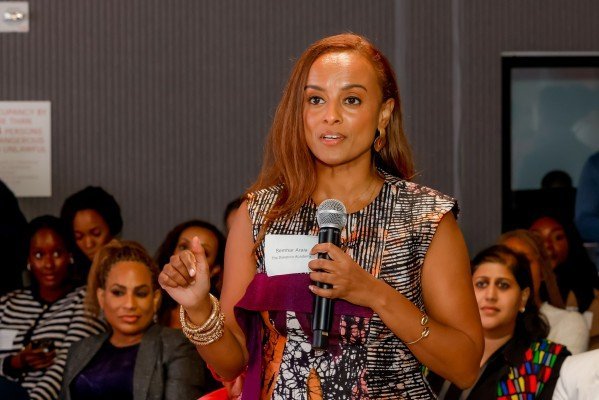
Four Recommendations Can Help Institutions Deepen This Momentum
Reading the FP Analytics report alongside what I heard in New York, there are four ways institutions can strengthen and scale the work already underway.
- Match collaborative diaspora giving. Global philanthropists have offered to match the innovations that working groups on health and education develop together. Mexico’s 3×1 program, where governments add three dollars for every dollar hometown associations contribute, shows how matching multiplies impact.
- Build diaspora-specific giving and investment products. Donor-advised funds, pooled funds, and retail investment vehicles give diaspora members of every income level a clear way to act on their commitment. Corporations can also create workplace giving programs and incentives to build upon the organic diaspora philanthropy taking place in their organization.
- Elevate diaspora advocates inside institutions. One diaspora professional inside a foundation, pension fund, or company can open the door to millions in new capital, and institutions benefit when they invite those colleagues to lead.
- Segment before you engage. Kady urged institutions to “segment our audience and our markets and our communities so that we can lower the barrier of entry for everyone.” TDA’s Three G’s, Generation, Gender, and Geography, offer a practical way to map who holds which skills, networks, and capital, and where they live, so every invitation fits the people receiving it.
Diasporas invest their time, talent, and treasure in the places they call home, and every one of those investments deserves a partnership built to match it. The leaders I heard in New York, and the Nigerian philanthropists featured in the FP Analytics report, are already showing what that partnership looks like. The institutions that join them now will help shape what African philanthropy becomes over the next decade.
👉🏾 Want tailored strategy? Explore our consulting or coaching services at thediasporaacademy.com/consulting or thediasporaacademy.com/coaching.
👉🏾 Subscribe to Diaspora Digest
One email every Monday, with news, data, builders, events, and jobs from across the diaspora world.
