
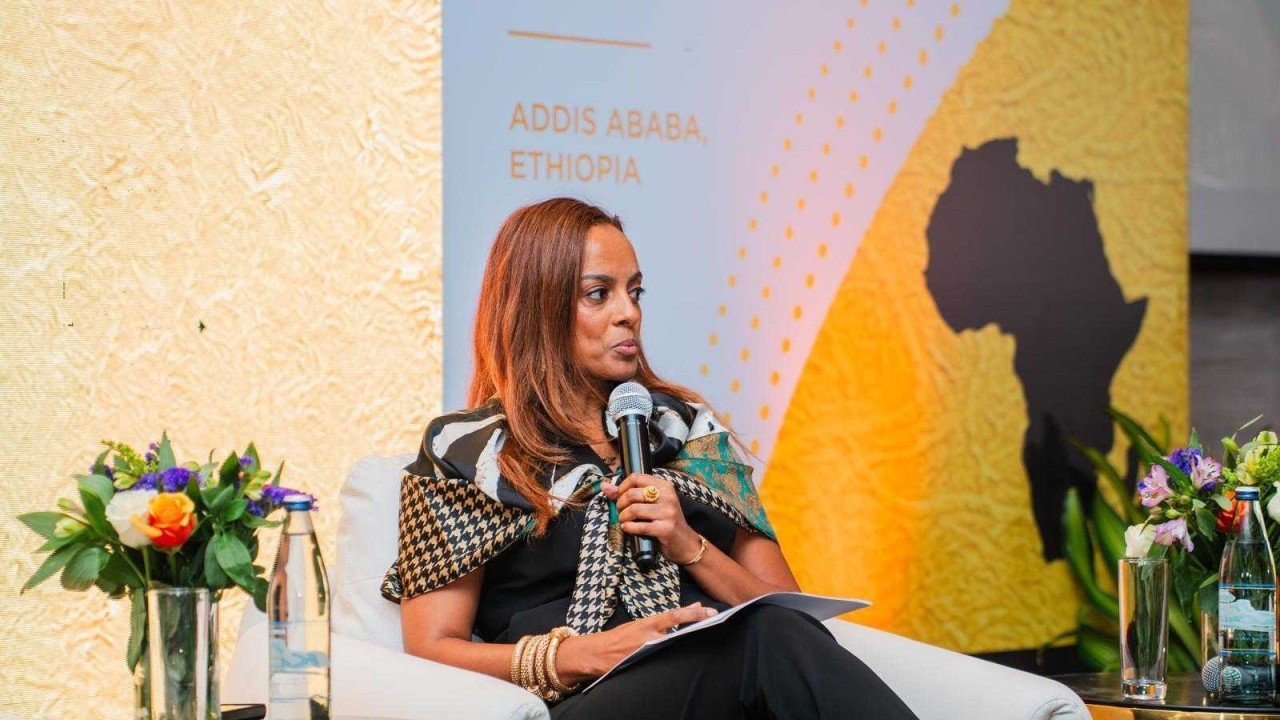
Last month, The Diaspora Academy had the opportunity to present at the US-Africa Futures Summit’s panel on migration, diasporas and mobility, “Africa in Motion: Migration, Mobility and Demographic Change”.
The summit, which was held in Addis Abeba, Ethiopia, consisted of global attendees from the diplomatic, philanthropic, public, private, non-profit, diaspora and civil society sectors. The conversations were electric, nuanced and deeply revealing. I left the Summit more certain of one thing: Despite the headlines, US-Africa relations are not weakening, and now is the time to be bold, innovative, and ambitious with African diasporas as partners.
Many audiences read “Africa in motion” as a contemporary emergency-related movement of people, crossing borders under distress. That reading holds one part of a much larger story. The fuller story runs through the past, the present, and a future where Africa’s population doubles on the continent as its diaspora grows alongside it.
Like all diasporas, African diasporas aren’t going anywhere. Over the next 25 years, migration flows and remittances between Africa and the world are projected to grow.
They aren’t a magical unicorn with all the answers, and they aren’t a flash in the pan opportunity.
They will remain at the forefront of all sectors – business, entrepreneurship, culture, arts and diplomacy – as partners, innovators, and changemakers, like all diasporas have done for centuries.
Whether the diaspora opportunity is centered on trade, economic partnership, investment, innovation, entrepreneurship, or advocacy, diasporas will continue to operate as critical actors.
The difference is with Africa, the African diaspora’s role as stakeholders and partners is growing exactly during a time of deep global innovation, connectivity, and yes, upheaval and reimagination.
The real question is whether governments, organizations and companies will meet this moment with the imagination it deserves and extend pathways to partnership with African diasporas that meet them where they are and where the needs are.
Diaspora Belonging Rests on Commitment and Consciousness
At TDA, we rely on the International Organization for Migration’s 2013 definition of diasporas, which defines them as “Emigrants and their descendants, who leave their country of birth, either on a temporary or permanent basis, yet maintain material and effective ties to their country of origin.” It’s clear that this definition reaches far past first-generation immigrants and opens the door to multiple stakeholders within the diaspora who are maintaining ties to their homeland.
TDA also applies the African Union’s definition of diasporas, which has established the African diaspora as the continent’s 6th region, and defining diasporas as “consisting of people of African origin living outside the continent, irrespective of their citizenship and nationality and who are willing to contribute to the development of the continent and the building of the African Union.”
In addition to these foundational definitions, TDA also applies two additional dimensions to measure a diaspora’s readiness to partner and activate in their personal and professional journey:
- Commitment: Is the diaspora stakeholder committed to establish or maintain ties to their ancestral homeland through language, culture, economics, history, arts, social connection, or some other pathway?
- Consciousness: Is the diaspora stakeholder consciously seeking to explore their diaspora perspectives and reconcile their physical, emotional and mental journey between your adopted and ancestral homelands?
These behavioral indicators reveal two compelling diaspora stakeholder traits.
They reveal the diaspora individual’s motivations, ability and readiness to partner in business and development, and they tell us a story similar to that of a social entrepreneur’s journey.
Diaspora changemakers are social entrepreneurs, on a journey of discovery, asking hard questions, and solving a problem for the greater good. The Skoll Foundation considers the social entrepreneur as one with an entrepreneurial spirit with inspiration, direct action, courage, and fortitude. Ashoka’s CEO, Bill Drayton stated, “Social entrepreneurs are the essential corrective force. They are system-changing entrepreneurs. And from deep within they, and therefore their work, are committed to the good of all.“
Diaspora belonging, impact and partnerships, therefore, requires a process of self-identification, self-discovery, and self-activation to address existing gaps, offer measurable results and help solve systemic problems.
To build an effective diaspora partnership, understanding your stakeholders, audiences and partners is key. Diaspora partnerships require strategic business development, nuanced approaches, engagement frameworks and partnership incentives that will speak to the diaspora market in any sector, country, or region.
The US African Diaspora Spans Three Generations of Investors
It’s clear that the U.S.-based African diaspora market is larger than the conversation often reflects. While we tend to center African diaspora discussions on first-generation migrants, or broad based continental perspectives, it is only a partial capture.
Second-generation Americans of African descent, child migrants, and multigenerational descendants of enslaved Africans who self-identify as members of the African diaspora all belong in that count.
The scale shows up across several measures:
- The roughly 2.5 million African immigrants in America nearly double, to at least 4.8 million people, when children of immigrants and multi-generational descendants of African migrants are included. This, along with the additional 40 million Americans who identify as Black, or African American, expands the diaspora prospects significantly.
- According to the Pew Research Center, the Black immigrant population reached 5.6 million in 2024 and now stands at 11.4 percent of all Black Americans. This includes Caribbean and African immigrants.
- African-born immigrants are the fastest-growing share, rising from about 600,000 in 2000 to 2.4 million.
Simply put, failing to disaggregate African diasporas – or any diaspora – into multiple segments, audiences and partners across the 3Gs: Gender, Geography and Generation, does a disservice to the work and rudely compresses the African diaspora into a monolithic group.
Multigenerational Engagement Is Where the Momentum Lives
Multigenerational diaspora engagement strategies would multiply the possibilities for partnerships, retention, and real impact. Institutions would be remiss to limit their African diaspora prospects and partnerships to first-generation migrants.
Diaspora members already invest across generations, through investment funds, trade, philanthropy, and a sharp rise in heritage travel.
Ghana shows what institutionalized diaspora engagement produces. According to Visit Ghana, the Year of Return and Beyond the Return initiatives turned heritage travel into a standing national program that invites multigenerational diaspora to reconnect, invest, and build. Benin, Nigeria, Liberia, and Kenya are opening similar doors.
The Time to Partner Boldly Is Now
It’s clear that Africa’s diaspora contributes across every dimension of the relationship, and the value is holistic.
- Knowledge Transfer and Access: Socially, diasporas move knowledge, mentorship, and community networks that link institutions on both continents. They translate the local context that no external consultant can replicate, and they open doors to trusted partners on the ground. A single diaspora professional often carries relationships across universities, associations, and hometown networks that would take an institution years to build.
- Drivers of Trade and Economic Growth: Economically, diasporas build trade, launch ventures, and create jobs across borders. They source suppliers, open export channels, and move products between African markets and the United States. Their firms hire on both sides, turning personal ties into durable commercial infrastructure.
- Diasporas as Investors, Entrepreneurs and SMEs: Financially, diasporas invest in enterprises, infrastructure, and long-term programs that outlast a single campaign. Beyond remittances, they fund startups, real estate, and community institutions with patient capital that stays through hard seasons. Diaspora investment vehicles and diaspora bonds channel that commitment into projects a government or foundation can build on.
- Diasporas as Policy Stakeholders and Advocates: Diasporas are key civic and policy stakeholders who help shape and influence policy as constituents and policy advocates. They drive advocacy, join governance, and build the institutions that hold engagement together. They shape policy on both continents, serve on boards and advisory councils, and organize communities toward shared goals. When an institution needs legitimacy with a diaspora community, these are the leaders who convene it.
This is the moment for institutions to be more innovative, bolder, and more ambitious. Diaspora members are already investing, already building, already advocating, and the boldest institutions will build with them rather than wait for a safer season.
“I’ve always said diasporas are not an ATM, because that’s how it feels. But truthfully, we understand.”
— Semhar Araia, The Diaspora Academy
The strongest partnerships offer returns that people feel across every one of these dimensions. We build that future together, and the work belongs to institutions and diaspora members alike. The diaspora is already here, already ready, and the moment to build boldly is now.
Three recommendations for institutions ready to move:
- Map before you design. Commission a diaspora mapping of the community you want to reach, so strategy starts from who is actually present rather than an assumption about who they are.
- Build multigenerational from the start. Design engagement that reaches second-generation and multigenerational members alongside first-generation immigrants, and offer incentives that return social and civic value, not financial value alone.
- Institutionalize the relationship. Give diaspora engagement a budget line, an advisory function, and a calendar that survives leadership changes, so the partnership compounds instead of resetting.
✊🏾 Ready to take the next step? Enroll in the Diaspora Leadership Program.
👉🏾 Want tailored strategy? Book a consulting or coaching session.
thediasporaacademy.com/consulting · thediasporaacademy.com/coaching
👉🏾 Subscribe to Diaspora Digest
One email every Monday, with news, data, builders, events, and jobs from across the diaspora world.
Sources:
1. Institute for Security Studies, US-Africa Futures Summit.
2. World Bank / KNOMAD, Migration and Development Brief 39, Leveraging Diaspora Finances for Private Capital Mobilization.
3. American Immigration Council, Fortune 500 companies founded by immigrants or their children, 2025.
4. United Nations, world population projections.
5. International Organization for Migration, diaspora definition (2013).
6. African Union, Citizens and Diaspora Directorate (CIDO).
7. Pew Research Center, key findings about Black immigrants in the US, March 2026.
8. Visit Ghana, Year of Return and Beyond the Return.
9. Benin, diaspora engagement mapping (EUDiF).
10. Nigeria, Nigerians in Diaspora Commission (NiDCOM).
11. Liberia, Liberia Diaspora Network.
12. Ethiopia, Ethiopian Diaspora Service.
13. Kenya, State Department for Diaspora Affairs.
14. Sudan, IOM diaspora initiative.
